Best Astro Templates for Creative Agencies
Three Astro templates built for agency work, what each one is actually good at, and the questions worth asking before you buy any of them.
Most “best templates” lists are affiliate pages. This one is not: we built every template on it, so treat it as a catalog with opinions rather than a review. What it does give you is the part those lists skip — what each template is shaped for, and what it will fight you on.
An agency site has one job. Prove the work is real, then make it easy to start a conversation. Everything else is decoration. That sounds obvious until you look at what most agency templates ship: a hero with a headline generator, four service cards, a logo wall, and a contact form buried under a parallax section. No case studies worth the name.
So before the list, the three questions that actually decide this.
What to check before you buy any agency template
Does the case study have room for a real project? A card with a title and a cover image is not a case study. You need a page: the brief, the work, several images, and the outcome. If the template only gives you a grid that links to nothing, you will be building that page yourself in week one.
Is the contact flow short? Every extra field costs you leads. The template should ship a form that validates on the server, rate-limits abuse, and sends somewhere real — not a mailto: link and not a form that posts into nothing until you wire up a service.
Can you rebrand it in an afternoon? Colors, typography and site settings should live in one or two files. If the brand is scattered across forty components as hardcoded hex values, “customizing” means a search-and-replace with a 20% chance of missing something.
Now the templates.
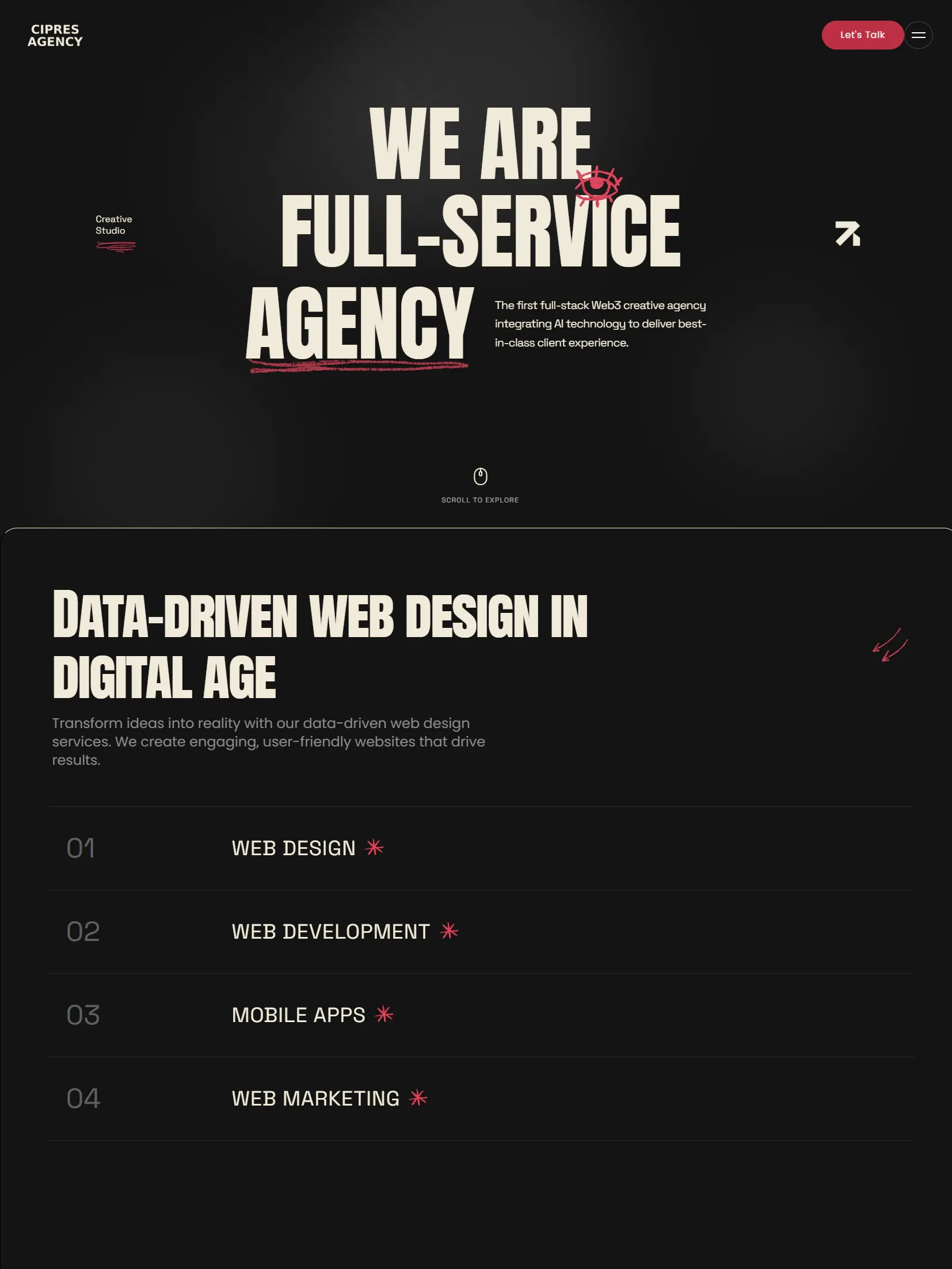
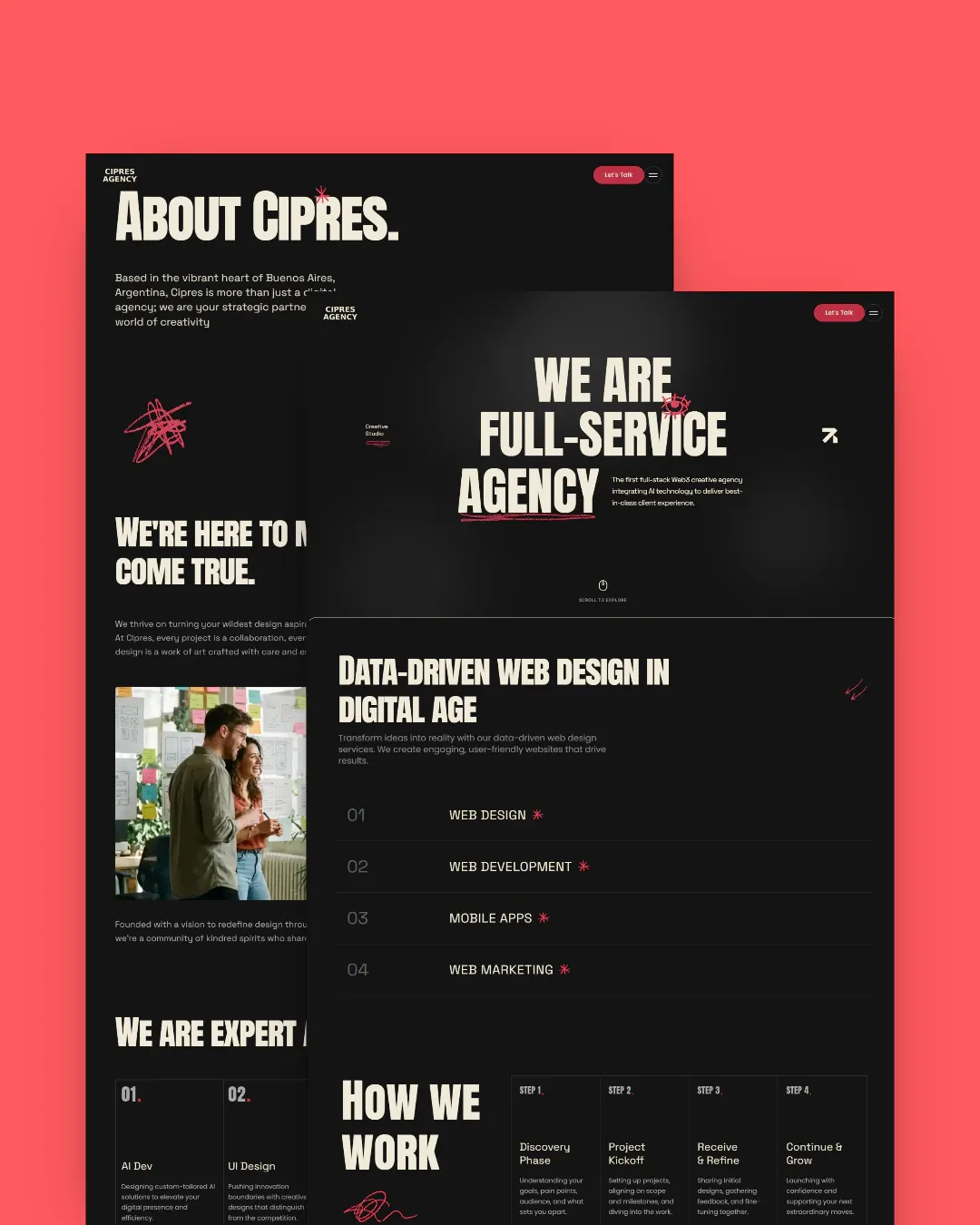
Cipres Agency — when the work is the pitch
Dark, dense, and built around project case studies. The animated fullscreen menu is the loudest thing in it, and everything else stays out of the way of the images.
The reason to pick it: the copy is centralized. Every string the site shows lives in one config file, which means rebranding is a single pass through one document rather than a hunt through components. If you build sites for clients repeatedly, that alone pays for the template.
Pick it if your pitch is “look at what we made”. Skip it if you need a light, airy layout — this one commits hard to the dark direction and fighting that is more work than starting elsewhere.
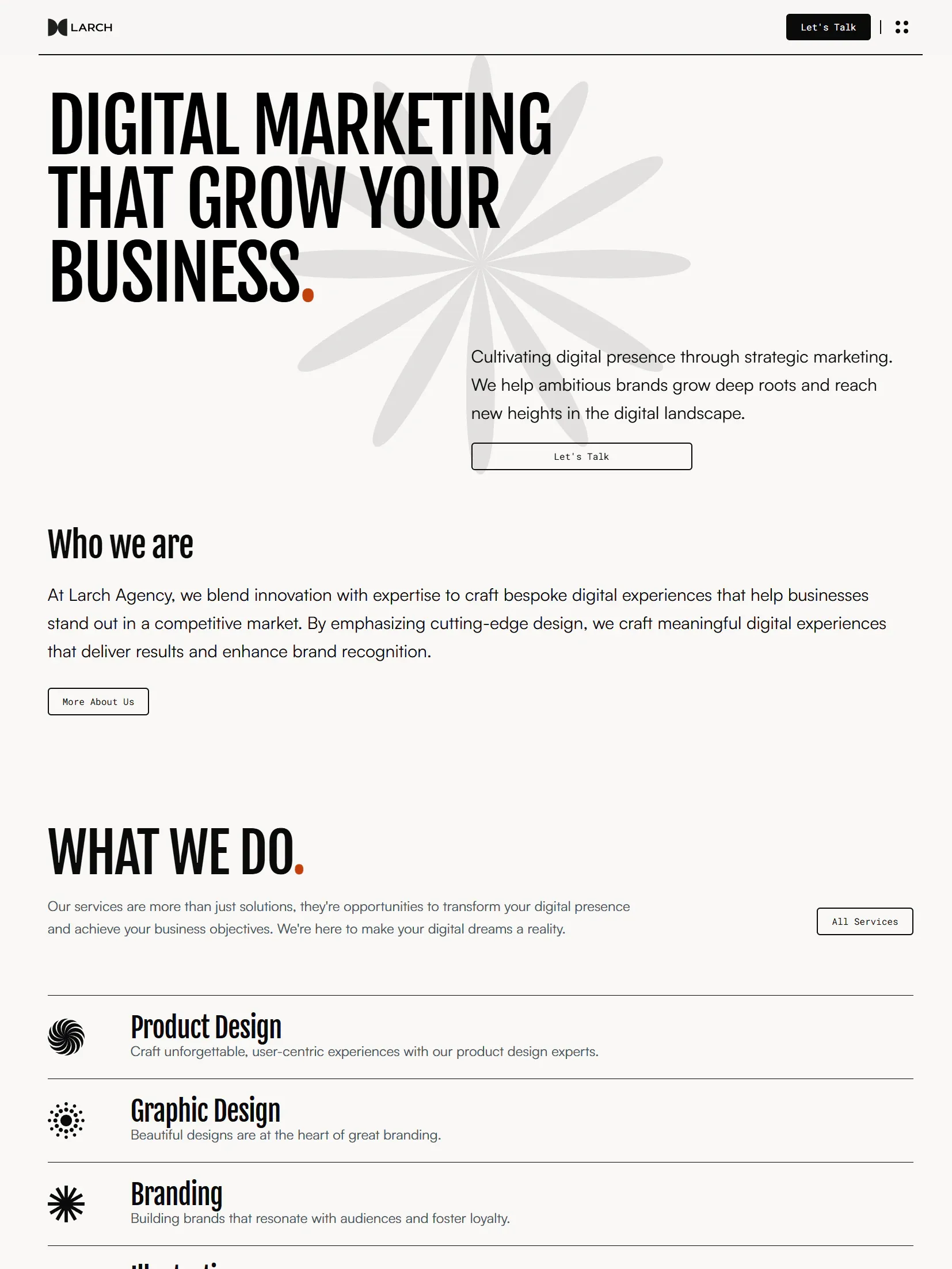
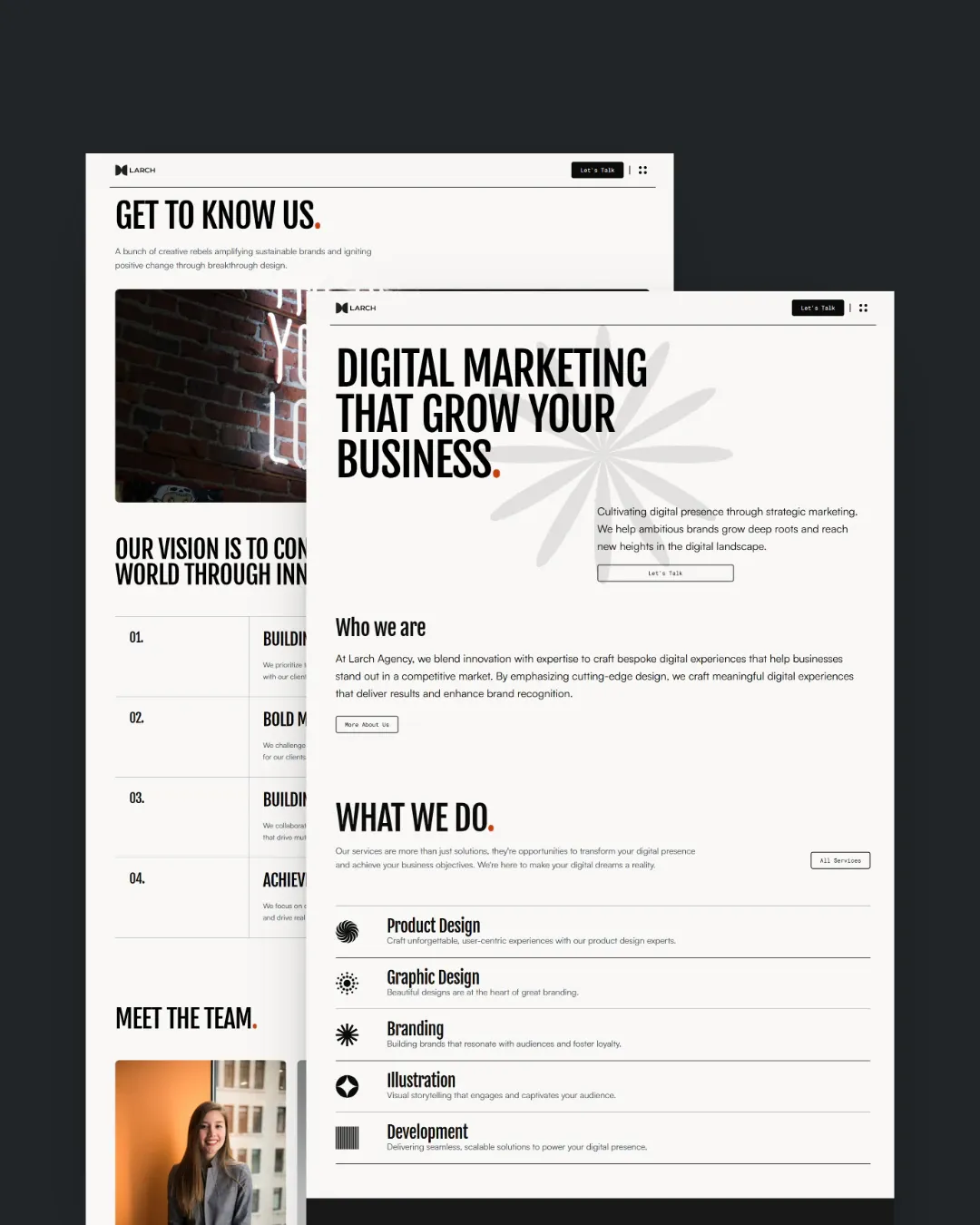
Larch Agency — when you sell services, not just work
Marketing agencies have a different problem from design studios. The work is often under NDA, or it is a spreadsheet of results rather than something photogenic. Larch is laid out for that: service pages that can stand on their own, case studies that lead with outcomes, and a contact flow that gets to the point.
Pick it if a prospect needs to understand what you do before they care who you did it for.
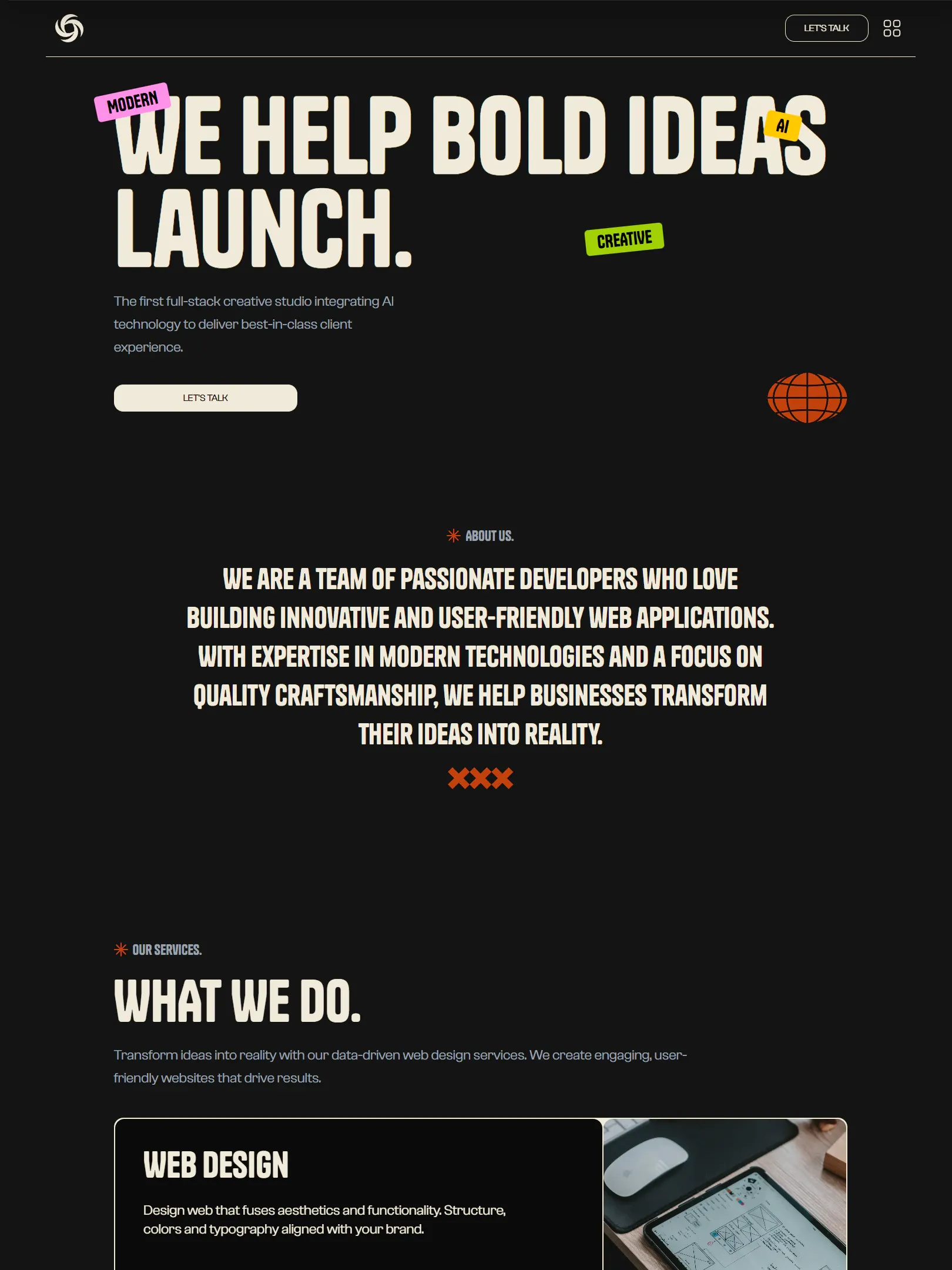
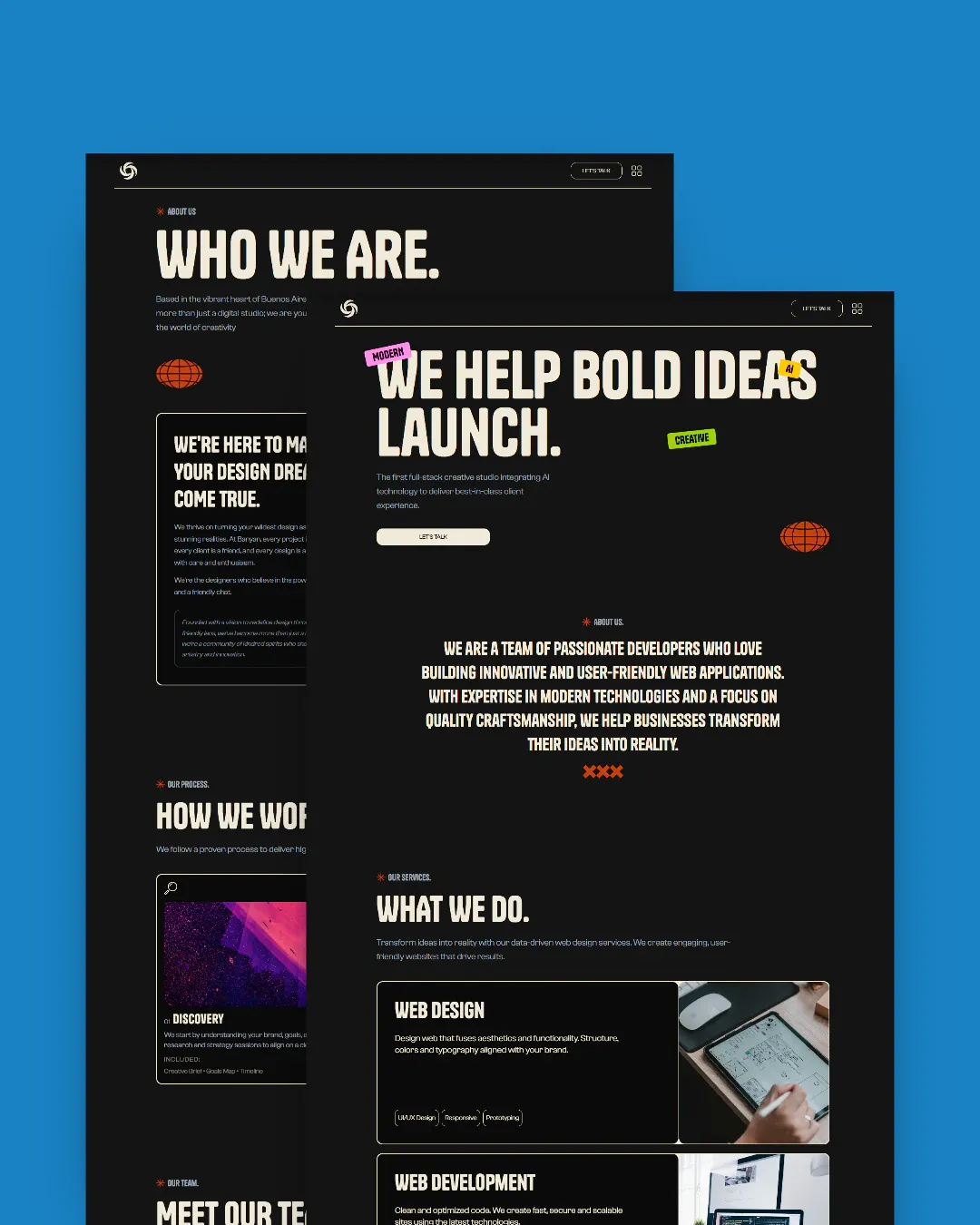
Banyan Studio — the portfolio-first option
Dark, animated, and the most portfolio-shaped of the three. The fullscreen menu and the case-study grid do most of the talking. It reads as a studio rather than an agency, which is the right call if there are two or three of you and the work is the entire argument.
Pick it if you are small and want the site to feel bigger than the team. Skip it if you need service pages, a blog, and a process section — that is a different brief.
What they all ship
This part is the same across the catalog, and it is worth stating because it is where template quality usually collapses:
- Astro 7, Tailwind CSS 4 and TypeScript, in strict mode. Small components with comments, no abstraction layers you did not ask for.
- Content in Markdown, through typed content collections. Adding a project is writing a file, not learning an admin panel.
- A working contact form — server-side validation, rate limiting, delivery through Resend. It needs an API key, not a rebuild.
- Local image optimization, so a heavy photo set still loads fast.
- Deploy configuration for Vercel, Netlify and Cloudflare Pages.
The honest comparison
| If you need… | Take |
|---|---|
| Case studies to carry the pitch | Cipres Agency |
| Services and outcomes up front | Larch Agency |
| A small studio that reads bigger | Banyan Studio |
| To decide later | The pack |
If you are choosing between two of them, the pack is usually the cheaper mistake: one payment, every template licensed for unlimited projects, and the second one is already there for the next client.
What a template does not fix
A template is a starting point, not a strategy. It will not write your case studies, and a beautiful grid with three thin projects in it looks worse than a plain page with one excellent one. Budget more time for the writing than for the build — with any of these, the build is a day.
These three are the picks. The agency category has seven in total — browse them all, or the whole catalog if none of these is quite the brief.